
The Hidden Margin Killer in New Product Development
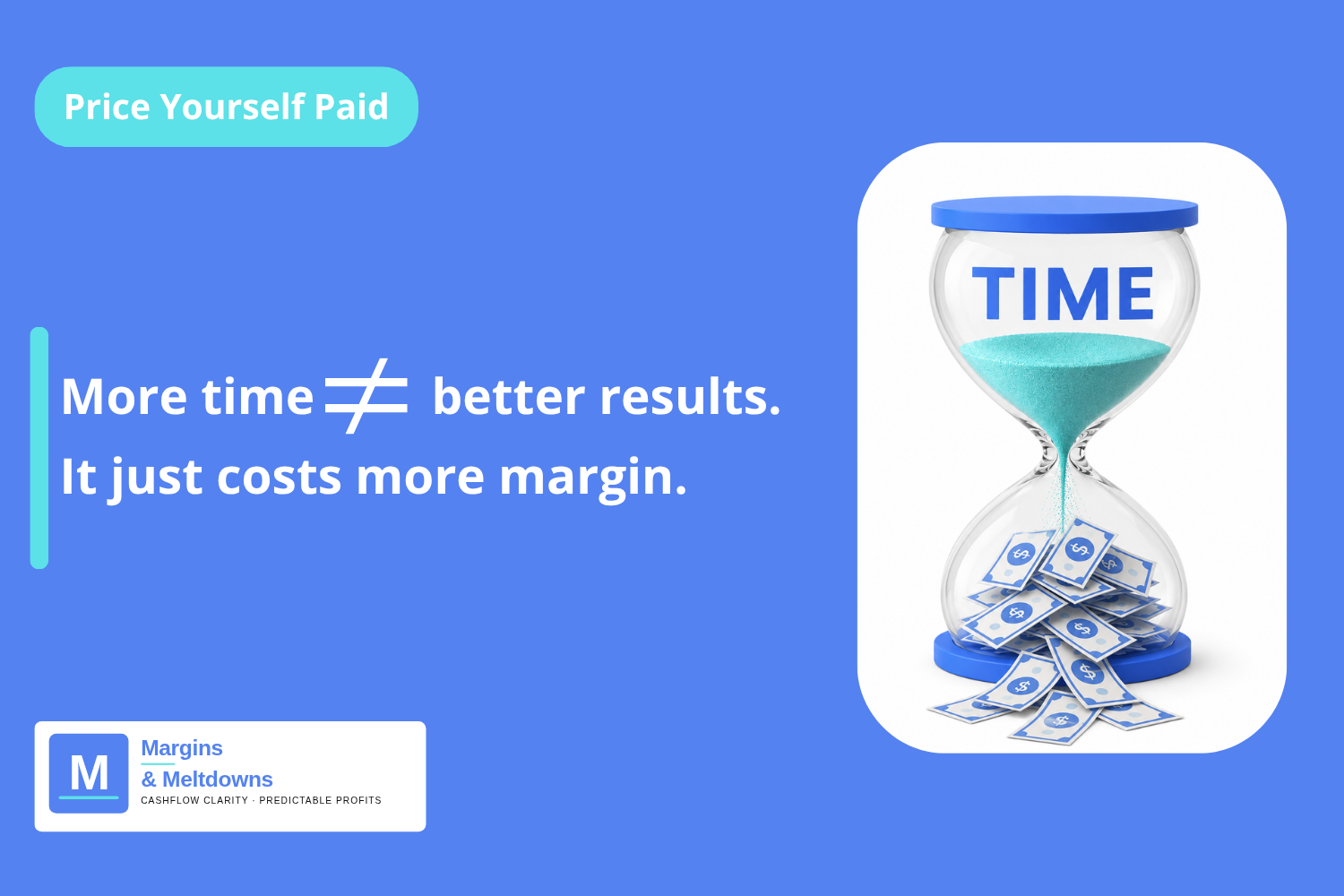
There’s a law of human behaviour you probably know by a different name.
You’ve felt it on a Sunday afternoon when you had “all day” to write one email and somehow still hadn’t done it by 7pm. You’ve felt it in a project that had a generous three-month runway and mysteriously needed every single day of it.
I first encountered it from an academic standpoint in a managerial leadership class at Yale.
It was one of those ideas that lands with a satisfying thud, not because it’s complicated, but because it names something you’ve already felt a hundred times without having the words for it.
The law is this: work expands to fill the time available for its completion — and in product businesses, budgets do exactly the same thing.
It was first articulated in 1955 by British naval historian C. Northcote Parkinson, in a satirical essay for The Economist: “Work expands so as to fill the time available for its completion.”
I found it fascinating. I also, if I’m being honest, proceeded to demonstrate it flawlessly for the remainder of my degree. Give me a three-week deadline, and I’m not spending three weeks working on the project. I’ll procrastinate until 72 hours out, then hyper-focus and execute. I excel at Parkinson’s Law. Give me endless time and I’ll meander. Give me 72 hours and suddenly I’m suspiciously productive.
I graduated, threw myself into my corporate career, then built a business or two, and quietly filed the concept away somewhere between “intellectually interesting” and “not immediately useful.”
And then, years later, I picked up Profit First by Mike Michalowicz. A cash flow book for small business owners. Not exactly The Economist, 1955.
If you leave all of your revenue sitting in one account, you’ll almost certainly find a way to spend all of it. Expenses expand to fill available cash, exactly as work expands to fill available time.
I stopped. Laughed, a little.
Because I hadn’t just studied this law. I hadn’t just demonstrated it throughout my MBA. I’d been living it inside my own product development process for months and hadn’t recognised it until that moment.
Same law.
Different container.
Same outcome.
What Does Parkinson’s Law Have to Do With Your Margins?
Here’s how it plays out in product development, and I’m going to use my own experience because I lived this one fully.
When I was developing a new product for COR Silver, I gave the formulation process the time it deserved. Nano-silver technology is not simple. Getting the concentration right, the pH right, the efficacy proven, the safety data clean … that work is genuinely non-negotiable. I spent upwards of 18 months on it, and I don’t regret a day.
What I do regret is giving everything else the same runway.
Packaging. Marketing copy. Product photography. I treated each of these as equally critical, equally unfinished, equally in need of one more round. I ran design by committee. I kept iterating. Another six months passed, and with it a serious chunk of start-up capital. Not on the thing that differentiated the product, but on things that needed to be good enough to launch, not perfect.
Think about that for a moment: six months.
Six more months of ongoing outgoings.
Six more months before customers could buy.
Six more months before a single dollar came back into the business.
That’s Parkinson’s Law at work on your margins.
The budget expanded because the container had no lid.
The timeline stretched because nobody drew a line between must be right and must be ready.
Parkinson, in 1960, articulated a second law: expenditure rises to meet income.
For founders, I’d tweak it slightly: expenditure rises to meet whatever budget you fail to constrain.
The Two Categories Every Product Launch Needs
Before you start your next development cycle (or if you’re mid-way through one right now) sort every decision into one of two buckets.
Bucket 1: Must be right.
These are the decisions that are genuinely launch-blocking and brand-defining. For a skincare brand, formulation sits here — safety, efficacy, and differentiation are non-negotiable. For a food brand, it might be the recipe and the nutritional panel. For apparel, the fabric quality and the sizing grading. These decisions have a high cost of getting it wrong and are difficult to fix post-launch.
Give these the time they need. This is not where you impose artificial urgency.
Bucket 2: Must be good enough.
Everything else. Packaging can be iterated in the next production run. Copy can be updated on a Shopify product page in ten minutes. Photography can be reshot at six months in, once you have customer feedback and a little more cash coming in.
These decisions expand to fill whatever time you give them. So don’t give them much.
The Seoul Story
There came a point with a different product where I had been going back and forth for months. Design elements weren’t landing. Sample rounds weren’t resolving. Every email chain spawned another question.
I made a decision: I got on a plane to South Korea.
I sat in the room with everyone who needed to be there: the chemists, the lab scientists, the perfume “noses”, and the packaging designers. We had two days.
Everything that had been circling for months got finalised in 48 hours. Not because the decisions were easier in person, but rather because the container had collapsed. There was no longer infinite runway for another round of feedback. We had two days. So we decided.
Constraint isn’t a failure of ambition. It’s the strategy.
The Real Lesson
Years after learning Parkinson’s Law, I realised it had almost nothing to do with procrastination. It’s about constraints.
Projects expand to fill available time. Expenses expand to fill available cash. Product development expands to fill whatever budget and timeline you leave undefined.
So, decide the timeline before the first sample arrives. Decide the budget before the first invoice lands. Decide which decisions are non-negotiable before your designer, formulator or agency tells you they have “just one more idea.”
Put a lid on the container.
Because if you don’t, Parkinson’s Law will.
It always does.
I learned that at Yale, forgot it in the chaos of building a business, and had to relearn it the expensive way.
Three Questions to Parkinson-Proof Your Next Launch
Before your next development cycle begins, write down the answers to these:
- What is the hard ship date? And what is the actual cost to the business (in cash, in seasonality, in opportunity) if you miss it?
- Which decisions are genuinely launch-blocking, and which can be iterated after you have sales data and customer feedback?
- What does “good enough to go” actually look like — specifically, not vaguely — and who has the authority to make that call?
These questions are the container. And the container is the strategy.
Founders often think freedom creates progress. In my experience, thoughtful constraints do. The right deadline. The right budget. The right definition of “good enough.” That’s how products get launched. That’s how margins are protected.
And eventually, that’s how the founder becomes one of the people who gets paid.
Margins & Meltdowns publishes every Tuesday. Cash flow strategy for founders who make physical things — and want to be paid for it.
Subscribe — it's free →



Member discussion