
Scale is Not a Strategy. It's a Cash-Eating Monster.
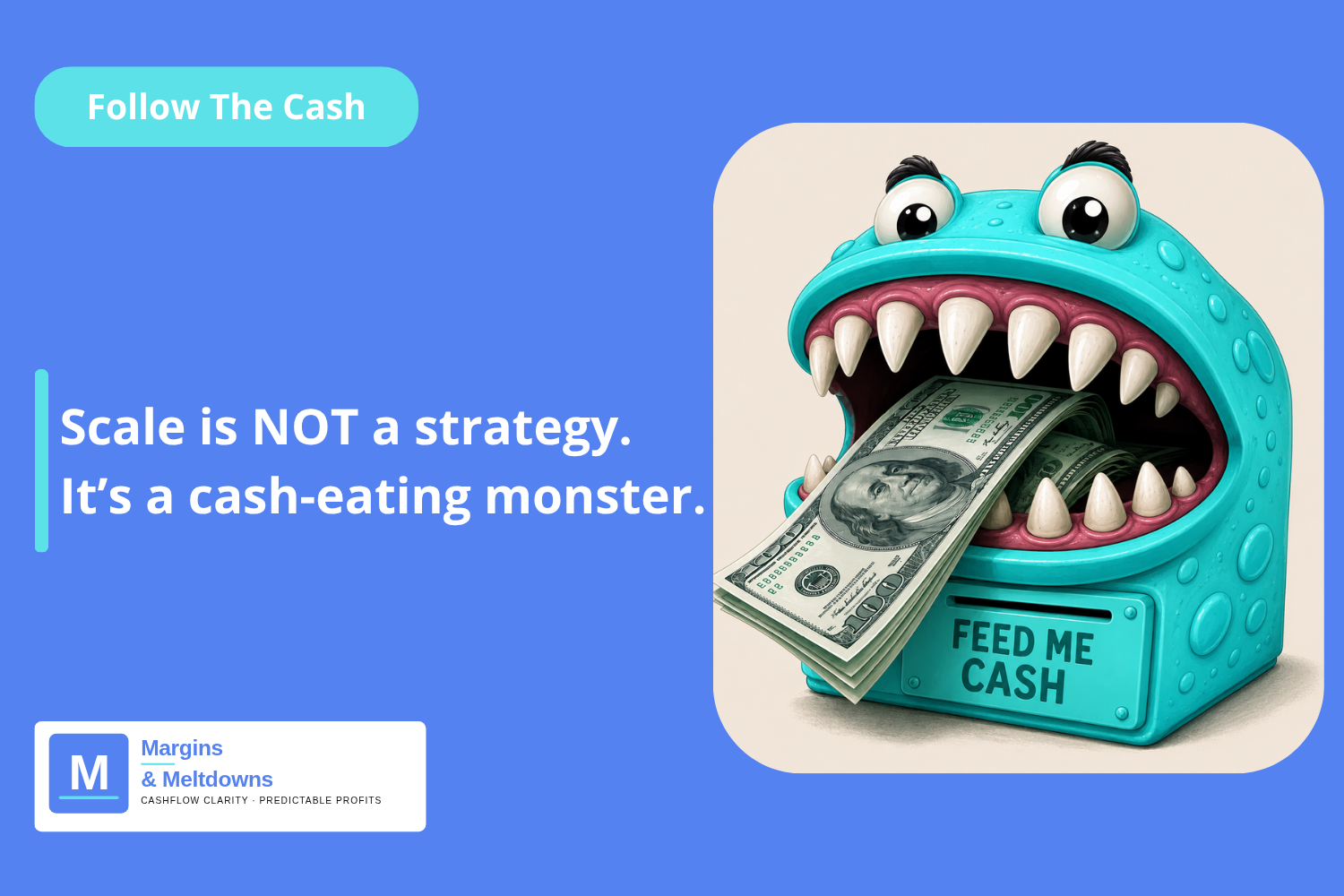
I want to tell you about a recent text message. A founder who is running a brand with real traction, real shelf placement, real community, texted one Tuesday morning. "We're up 40% this month," she wrote. Then: "And we might miss payroll."
Sales were climbing. Cash was gone. No fraud, no recession, no catastrophic mistake. Just growth, doing what growth does when you're not ready for it.
This story isn't unusual. In the CPG and inventory-based business world, it's practically a rite of passage. And yet founders keep sprinting toward scale as if it's the finish line — as if bigger is automatically better, and revenue is the same thing as money in the bank. It isn't. Not even close.
This is the quiet trap in CPG. Revenue is not cash. And scale, without financial architecture underneath it, is one of the most dangerous things you can chase in this industry.
A profitable company can run out of cash. Not because it's failing. Because it's growing too fast. Harvard Business Review has been writing about this for decades — the challenge of striking the proper balance between consuming cash and generating it is paramount. Fail that balance, and even a thriving company becomes a victim of its own success.
For inventory-based businesses, this is structural. You pay to make your product months before any revenue arrives. Then you wait through net-30/45/60 terms, distributor timelines, and trade deductions that show up 90 days after the PO. The cash cycle is long, lopsided, and unforgiving. Scaling makes every gap wider.
The five traps that break bootstrapped brands
Inventory lead times compound. Bigger batches mean bigger upfront cash out before your last batch has cleared.
Retailer terms punish growth. More doors doesn't fix the net-60 timing gap. It multiplies it.
Trade spend clouds your numbers. Deductions and billbacks arrive as surprises, months after the PO.
MOQ pressure locks cash early. Better pricing means bigger orders means cash committed before you've sold what you have.
Dead stock is the silent killer. You paid for it. You're storing it. It's not selling. That's not inventory — that's frozen cash sitting in a warehouse while your next production run waits.
Scale borrowed from the tech playbook — and it doesn't translate
Much of the "growth at all costs" mentality was borrowed wholesale from the software startup world. That logic made sense there for a while. Software scales at near-zero marginal cost. Sending another thousand users to your SaaS product doesn't require you to manufacture anything. There's no freight bill. No minimum order quantity. No spoilage date.
Physical products don't work like that. The majority of startup funding models were designed with software margins in mind, not physical products that face cash-flow gaps, production constraints, and long inventory cycles. When founders apply Silicon Valley growth logic to a bootstrapped skincare or food brand, they end up with impressive revenue charts and no money to pay their team.
And yet the pressure to scale is real. Buyers want to know you can handle volume. Investors want to see the hockey stick. Competitors seem to be moving faster. The whole ecosystem pushes you toward growth, and almost nothing in that ecosystem stops to ask: can your cash flow actually support this? HBR research across 11,000 companies over 25 years found that most firms fail to consistently grow revenues and profits long term — and premature scaling is a leading reason why.
Build the financial floor before you add more floors
Generate stability in your true cash profitability before attempting to scale. Scale isn't the enemy. Premature scale is. There is a version of growth that is careful, deliberate, and cash-positive — where every new account, every larger run, every new channel has been modelled against your actual cash position, not just your projected revenue.
The founders who survive the scale-up phase aren't necessarily smarter or better connected. They've built a repeatable cash flow system. They know their numbers in weeks, not quarters. They treat profit allocation as sacred, not optional. And they refuse to let revenue vanish into the great black hole of inventory and trade spend without tracking where it went.
Cash flow is oxygen. The founders still standing in ten years aren't the ones who grew the fastest. They're the ones who refused to build a monster they couldn't afford to feed.
Further reading
Harvard Business Review — How Fast Can Your Company Afford to Grow?



Member discussion